Skip to content
Help find missing people.→

Intelligence management for serious teams.

Scattered sources become intelligence your team can defend. One accountable record, in our cloud or on your own infrastructure.

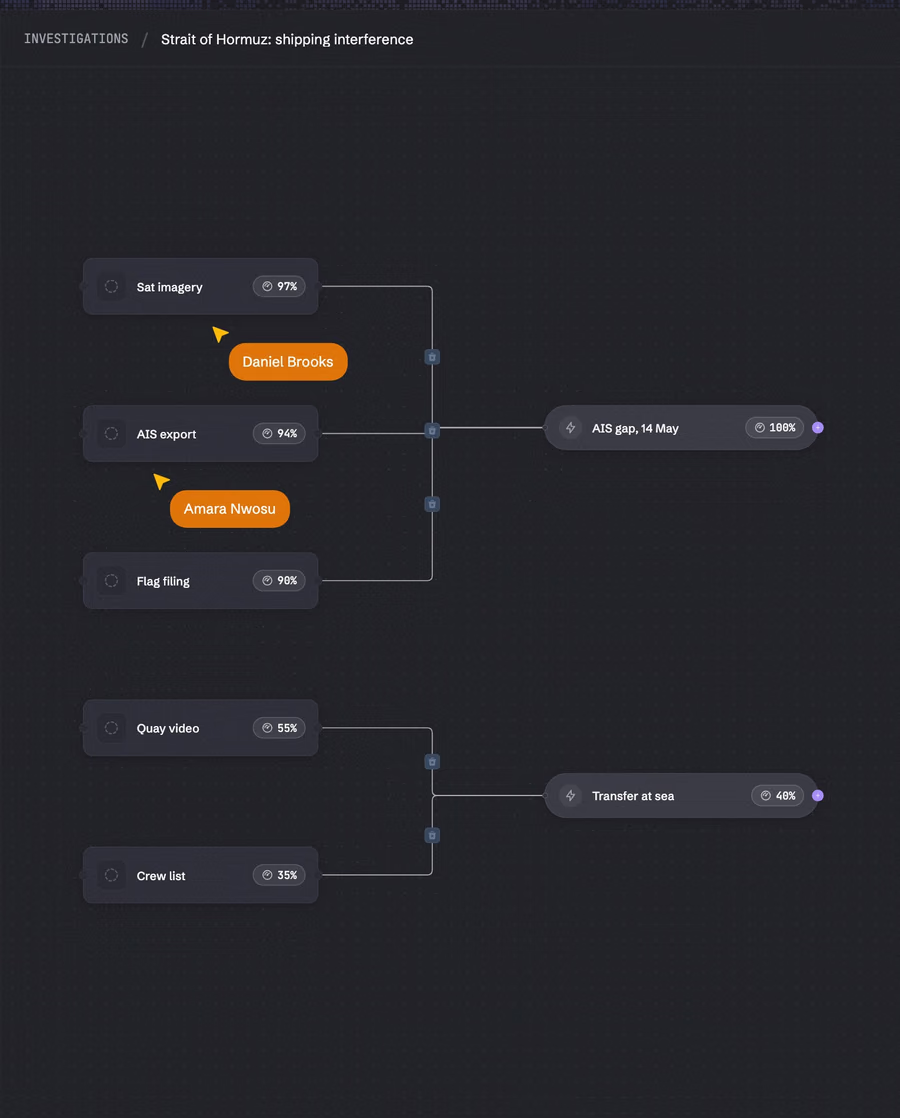
Newrali Command Center: an investigation's graph with two colleagues' cursors on it, beside a source's property panel with its grade, tags and computed confidence.

[01] — The problem

Your tools hold the data. Nothing holds your method.

Every tool keeps its records in its own shape, so the method that makes your team good lives beside them: in spreadsheets, in habits, in people's heads. It leaves when they do. Newrali is the layer that holds it.

Fixed forms 001

The tool decides what a source is.

Side spreadsheets 002

The grading lives in a sheet beside it.

Flat evidence 003

A rumour weighs the same as a sworn statement.

All or nothing 004

One sensitive detail locks the whole record.

[02] — The model

Start with one label. Build the foundation your way.

Most tools hand you their schema on day one and make your work fit it. Newrali starts from the fields you choose. Name what your team tracks, group it, give it weight and decide who sees it, and the platform takes that shape for your whole team.

[01] — Label · The field

It starts with a label.

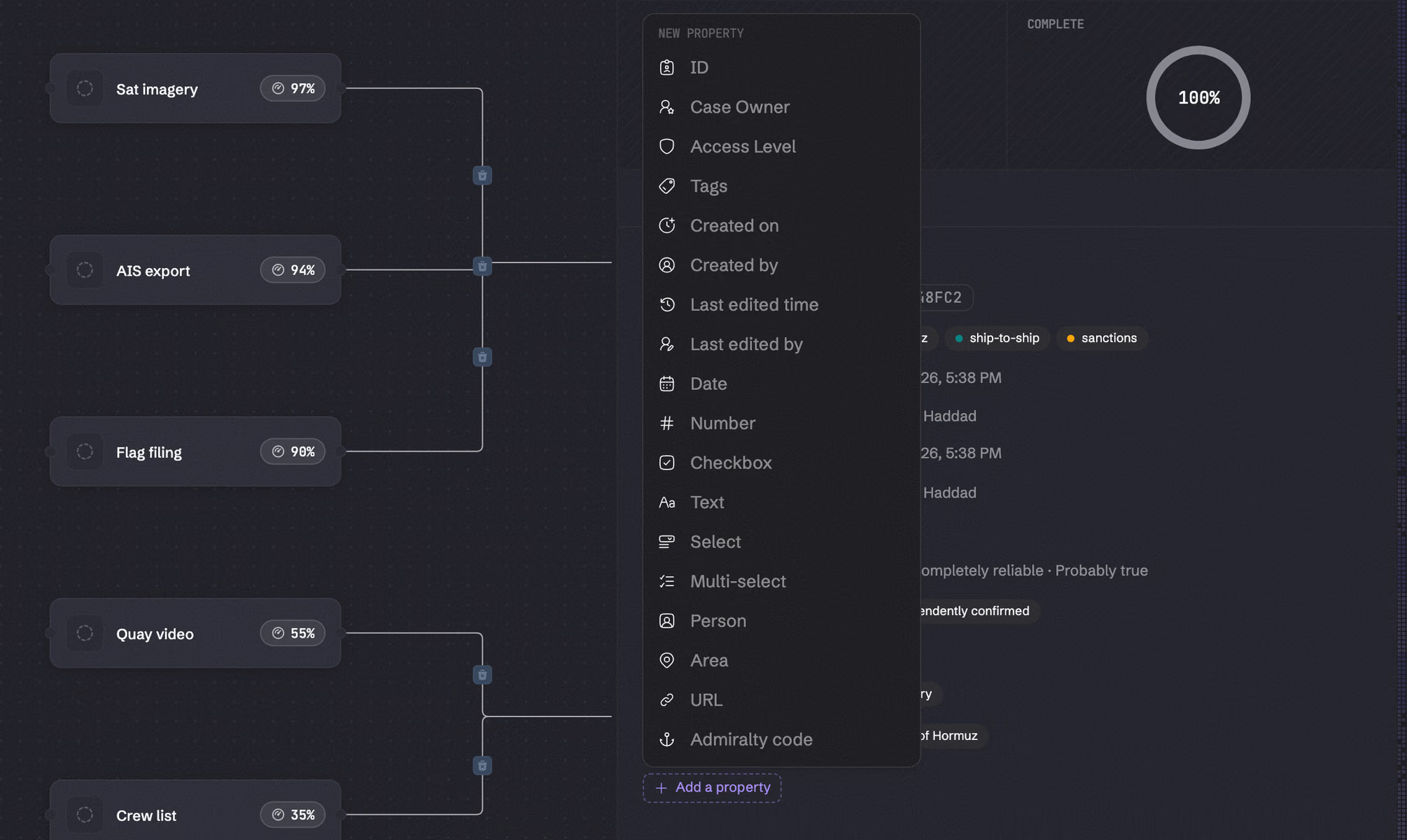
Reading a source, you notice something worth tracking: a grade, a method, a region. Add it from the side panel and pick a type, and it is a field on every source from that moment. No migration, no release, no ticket to anybody.

The source panel in Newrali with its Add a property menu open, listing the field types a team can add.
[02] — Structure · Your sets

Labels become your structure.

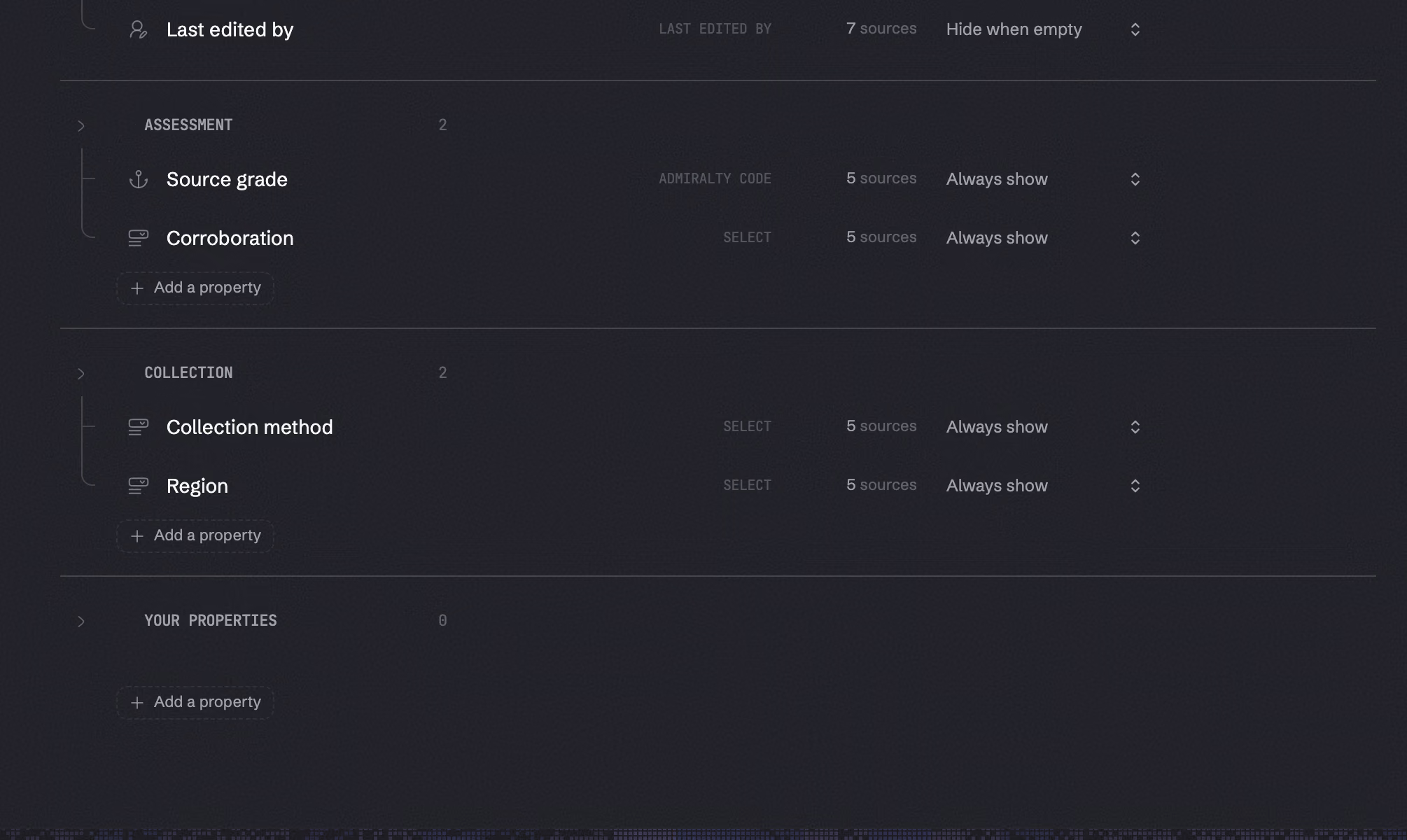
Group fields into sets your team names and orders, like Assessment and Collection. Drag to reorder, rename at will, hide what you rarely need. Renaming a field or an option never orphans what it holds.

The properties settings in Newrali: the team's fields grouped into named sets, each with its type, usage and display.
[03] — Weight · Confidence

Some labels carry weight.

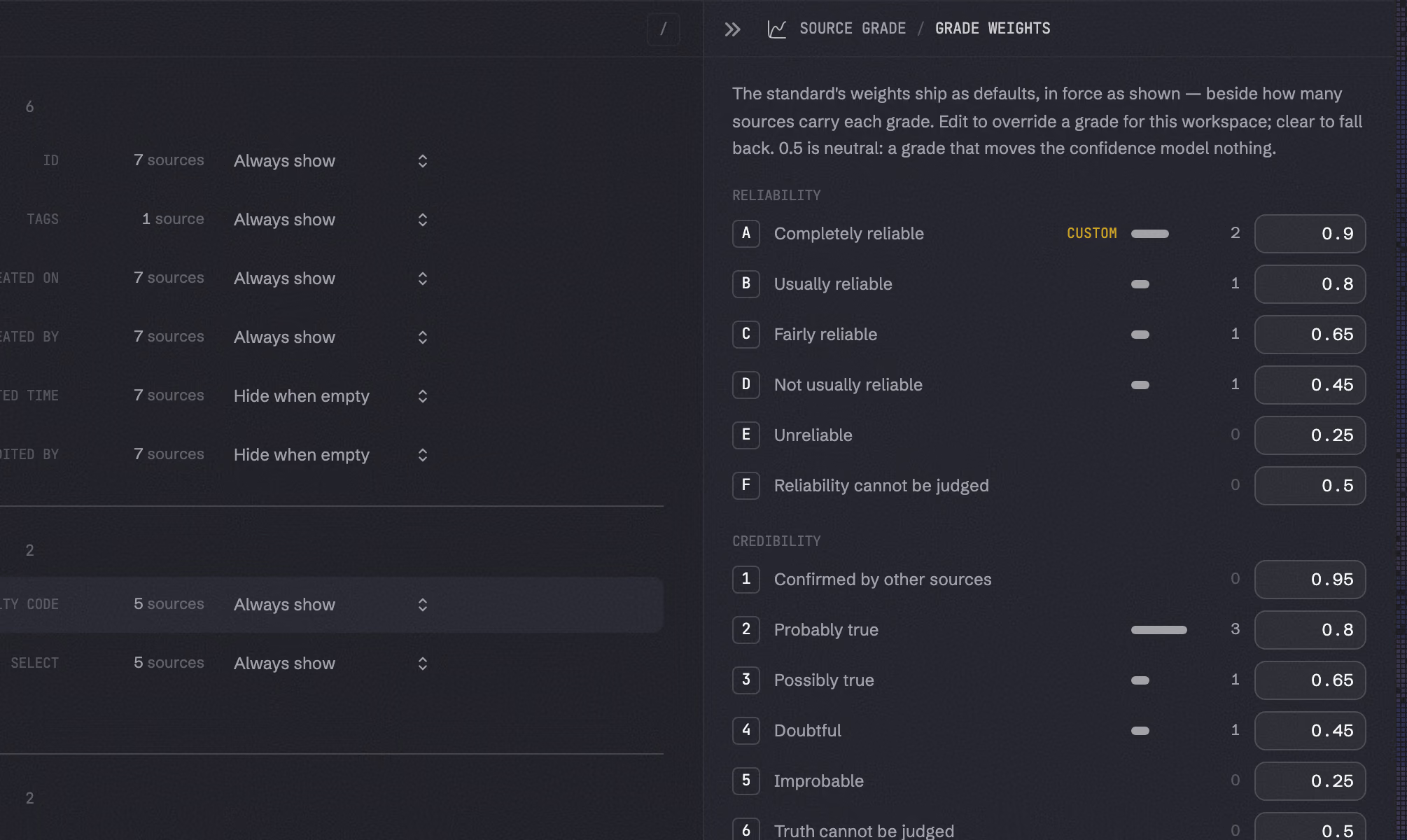
An Admiralty grade or a weighted option is evidence. Confidence is computed from your own grading, with weights your team sets, and it travels through the graph from the sources that earned it.

The confidence model in Newrali: the weights behind each Admiralty grade, one of them set by the team.
[04] — Access · Need-to-know

Some labels are need-to-know.

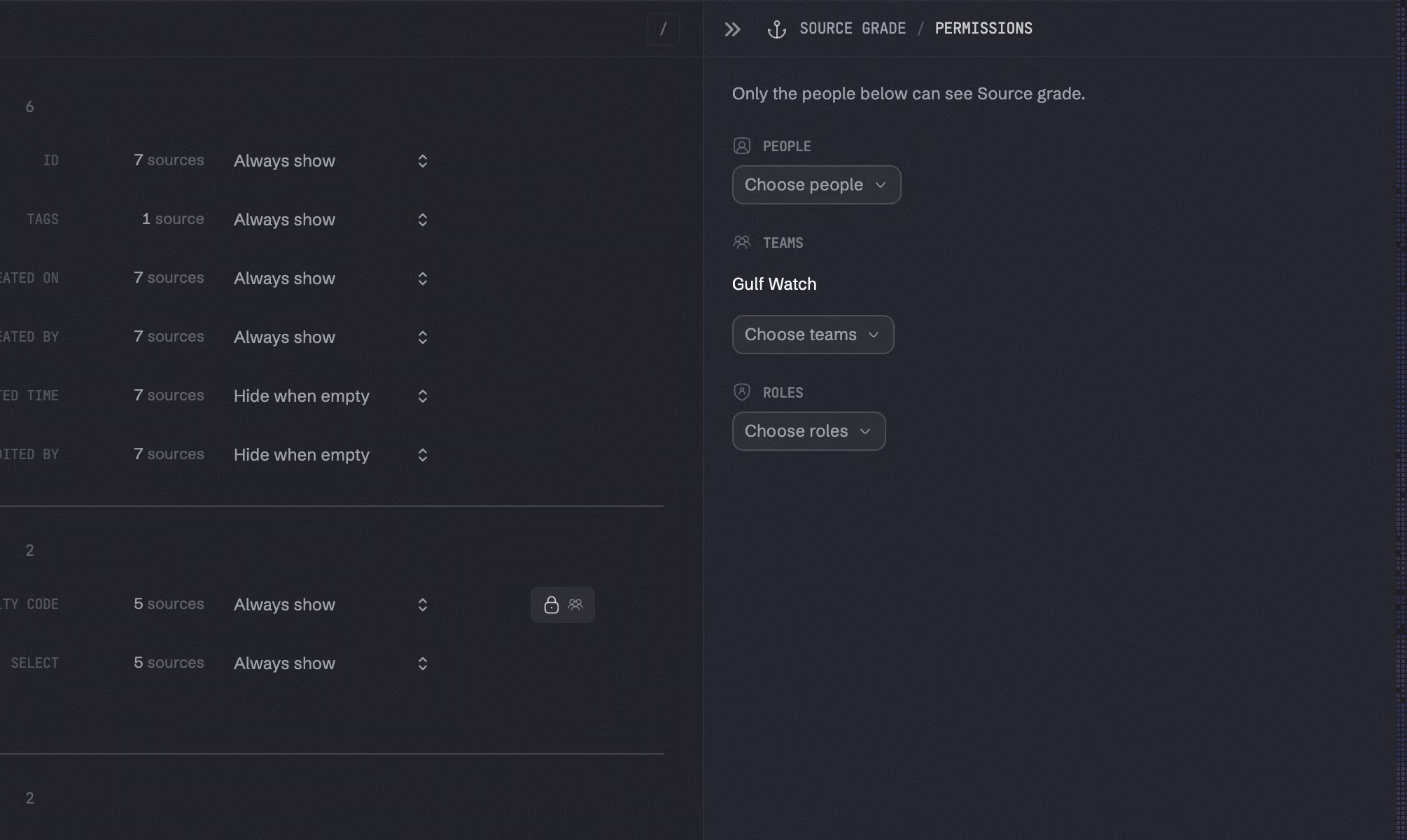
Narrow a field, or a whole set, to named people, teams or roles. Grants only ever narrow, never widen.

A field's permissions in Newrali, narrowed to one team.
[05] — Together · Live

Then the whole team builds on it, live.

Everyone works the same record at once: colleagues' cursors on the canvas, a node moving as someone drags it, every field in step.

[03] — Trust

Built for work that must not leak.

Isolation and central authorization are not features of a higher tier. They are how the platform is built, on every plan.

◆ Verify us: request the pentest report →
01

Isolated by architecture: every query is scoped to your workspace, and the schema itself refuses a cross-tenant reference.

02

Decided centrally: one policy engine authorizes every request on the server. Nothing is left to the client.

03

Accountable by default: changes to the record leave a trail, and every finding traces to its sources.

04

Yours to run in our cloud or on your own infrastructure, with a zero-trust private cloud and air-gapped deployment coming soon. Whenever you choose, the whole record leaves with you.

[04] — Field record

We run our own operations, in the open.

Newrali runs intelligence operations on the platform and publishes the directives and the reports. Partners run theirs. This is the record so far.

  • [GULF] — Newrali operation

    The US–Iran conflict over the Strait of Hormuz

    One operation worked across the political, economic, social, technological, legal, environmental, and military picture.

    7 DIRECTIVES · 3 FIELD REPORTS · Open now

    Read the directive →
  • [COL] — Newrali operation

    The Mw 7.4 earthquake in Chocó

    An environmental-security directive on the cascading effects of the San José del Palmar earthquake.

    1 DIRECTIVE

    Read the directive →
  • [ITA] — Newrali operation

    Organised crime and geopolitical influence in Italy

    A competition-format investigation into how tactical violence converts into market control and institutional influence.

    1 DIRECTIVE · 1 FIELD REPORT

    Read the directive →
  • [AUS] — Partner operation

    Australia's National Missing Persons Hackathon

    A week-long national operation: more than a thousand participants in seven cities, under a format that scored the report, not the find.

    1 WEEK · 1,000+ PARTICIPANTS · 7 CITIES · 6 CASES

    Read the account →

[05] — FAQ

Questions, answered plainly.

Anything else, put it to the team directly. You will get a plain answer.

[01] What is Newrali?
Newrali is an intelligence management and orchestration platform for analysis and investigative teams. The fields on every investigation, source and report are properties your team defines, so the platform follows how you work instead of fixing a form in advance. On one shared, accountable record, a team collects its sources, maps entities and relationships, writes its reports, and delivers finished intelligence. Every finding stays connected to the evidence beneath it.
[02] Who is it built for?
Teams whose findings have to withstand scrutiny: government and defence, law enforcement and oversight bodies, corporate security and risk, law firms and advisory practices, civil society and research organizations, and newsrooms. It is built for teams of any size, and a single investigator can use it just as well. The work can be anything that starts with sources and ends with findings, and it can run for a week or for years. See the industries we serve.
[03] Does the platform make the assessment for us?
No. Newrali structures, links, and cites, and it computes live confidence scores from your own evidence grading. It shows the working behind every score, and each workspace can adjust the weights. The assessment, and the decision, remain with your analysts.
[04] Do you use Newrali yourselves?
Yes. We run our own intelligence operations on the same platform our customers use, and we publish the directives and field reports in Dispatches. It is the most direct way to judge the work.
[05] How does the modular platform work?
Command Center, the core every plan includes, carries the intelligence cycle. Modules extend it for a specific mission on the same record: Special Operations for large-scale collection with outside contributors under analyst review, and Publications for delivering finished intelligence as controlled briefings. Further modules are in development.
[06] Is our data isolated from other organizations?
Yes. Isolation is a property of the architecture, not a setting. Every workspace is a hard tenant boundary enforced in the database schema, every request is authorized by a central policy engine, and changes to intelligence products are audited. The security posture sets this out in full, including what is still ahead.
[07] Can we run Newrali on our own infrastructure?
Yes. Newrali Cloud is the fastest way to begin, and the same platform runs self-hosted on your own infrastructure. A zero-trust private cloud and air-gapped deployment are coming soon. See the deployment options, then book a briefing. We will scope it with you and say plainly where it does not fit.
[08] What does it cost to start?
Every workspace begins with a free 14-day trial of the full platform, extendable once. After that, plans start at $10 per user per month, billed yearly. Start your free trial in minutes. No demo call is required.

[06] — Community

Trade notes with practitioners worldwide.

Tradecraft, tooling, emerging threats, and open roles. The Newrali Discord is open to anyone doing the work.

Run your next investigation on Newrali.

Free for 14 days, extendable once. Or bring the task to a briefing, and we will tell you plainly whether Newrali fits.

Or find your sector